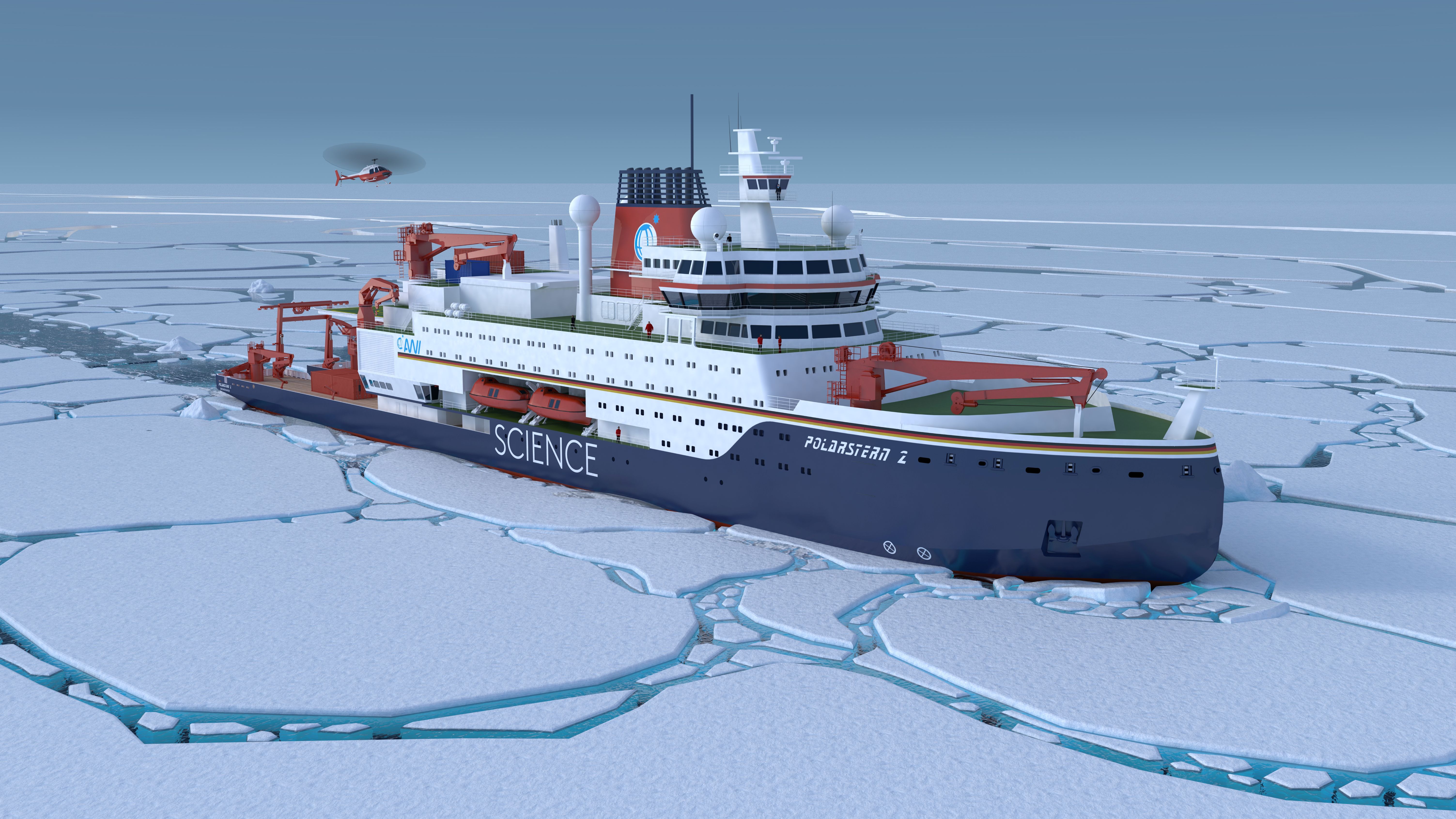
TKMS awards OPTONAVAL contract for Polarstern II
TKMS assigned OPTONAVAL with high-end Helicopter Visual Landing Aid System for new construction of research icebreaker Polarstern II
We are pleased to announce that OPTONAVAL has been selected by TKMS to design, manufacture, and supervise the supply of a Helicopter Visual Landing Aid System (HVLAS) for the new Polarstern, a German research icebreaker which is being built by TKMS in Wismar for the Alfred Wegener Institute, Helmholtz Centre for Polar and Marine Research (AWI) and will become the future flagship of German polar research. Designed for operations in the Arctic and Antarctic, the new Polarstern will enable cutting-edge scientific missions in some of the most remote and demanding environments on Earth. Delivery of the vessel is planned for 2030.
OPTONAVAL’s HVLAS will provide all necessary functional lighting systems to ensure safe helicopter operations under the extreme environmental conditions typical for polar regions. The system is specifically engineered to support continuous operations in ice-covered waters, low visibility, and harsh weather conditions, where reliable airborne logistics are essential for scientific and supply missions.
As part of the contract, OPTONAVAL will also be responsible for engineering support, system integration, and commissioning onboard the vessel, ensuring seamless implementation into the ship’s operational architecture. For TKMS, selecting leading technology partners is a key factor in delivering a vessel that meets the highest standards of safety, performance, and innovation for polar operations.
OPTONAVAL is a leading provider of high-end lighting systems for helicopter operations, navigation lighting, stabilized platforms, and customised engineering solutions. The HVLAS for the new Polarstern is tailored to meet the specific requirements of long-duration polar missions, with a strong emphasis on reliability, operational safety, and compatibility with modern aviation standards in extreme environments.
The new Polarstern will succeed the current research vessel Polarstern, which has been a cornerstone of international polar science since 1982. The new vessel represents a major step forward in sustainability, scientific capability, and operational efficiency for future climate and polar research.
Bild ©Alfred-Wegener-Institut/TKMS